How AI Search Engines Decide Which Brand You Are
How AI systems resolve brand identity during retrieval, and why inconsistent entity signals cause your brand to disappear from AI search results.
Read more
AI SEO / GEO
ChatGPT, Perplexity, Google. Every surface where your buyers look for recommendations. Plate Lunch Collective is an AI search optimization and Generative Engine Optimization agency. We build the presence that gets your brand mentioned, discovered, and remembered.

Sources: Semrush, How AI Tools Influence the Modern Buyer Journey, March 2026. McKinsey & Company, An update on US consumer sentiment: Embracing AI-supported shopping, March 2026. OpenAI announcement via Search Engine Land, February 2026.
The term AI SEO is used to describe two different practices. The first is applying AI tools to traditional search engine optimization: content generation, keyword research, link building, technical audits. The optimization target is Google's organic index. The AI is in the toolset.
The second is optimizing a brand's presence across AI search platforms: ChatGPT, Perplexity, Google AI Overviews, Gemini. The optimization target is the AI platform itself. The work is building the entity signals, content structure, and authority that cause these systems to retrieve, cite, and recommend a brand when a buyer asks a question. That work is generative engine optimization (GEO).
Plate Lunch Collective does both. We use AI tools across our SEO workflow because they make the traditional work faster and more precise. And we optimize brands for AI search surfaces because that is where buyer behavior is moving. Organic rankings feed the indexes AI platforms retrieve from. Both layers need to work. One without the other limits visibility and discovery across organic search surfaces.
How AI searches work
A buyer asks one question. The AI already knows their history, their constraints, their preferences. It breaks that question into the five searches it actually needs to answer, finds the best source for each one, and assembles a single recommendation. The brands that show up are the ones structured to be found on those searches. Not the original question. The searches underneath it.
A buyer has a conversation with an AI assistant. They mention being diagnosed with pre-diabetes, wanting to start running a few miles a week on concrete sidewalks downtown, and having bad knees. They ask: “What are the best running shoes for me?”
The AI does not search for that exact question. It already knows the buyer’s history, constraints, and preferences from the conversation. It decomposes the question into five sub-queries: best running shoes for bad knees, best running shoes for concrete and pavement, best running shoes for overweight beginners, running shoes with maximum cushioning, and best running shoes for starting a weight-loss program.
Each sub-query runs against the retrieval index independently. Some find matching sources. Others find no matches. The AI retrieves the best available content for each sub-query, then synthesizes the results into a single recommendation: two brands appear across cushioning, knee support, and pavement running. Both are widely cited for new runners adding mileage on hard surfaces.
The brands that appear are the ones structured to be found on the sub-queries underneath the original question, not the original question itself.
AI SEO covers the full discipline: optimizing a brand for visibility across AI search surfaces and traditional search engines. It includes the technical foundation, the entity work, and the content architecture.
Generative engine optimization (GEO) is the specific work of getting retrieved, cited, and recommended by platforms that synthesize answers from multiple sources: ChatGPT, Perplexity, Google AI Overviews, Gemini. These platforms read everything, write something new, and put your name on it or they do not. GEO is how you become part of what they write.
If your question is about Google's answer features specifically, that work lives at answer engine optimization.
A buyer asks ChatGPT or Perplexity which solution fits their problem. The AI compares options, explains tradeoffs, and names the brands worth considering. The buyer then searches Google for the brand they were just told about. The AI did the qualifying. Google gets the confirmation click.
If your brand is not in the AI recommendation, the Google search for your brand never happens. Your organic rankings only matter for buyers who already know to look for you. AI search is where that awareness is built in 2026.
The data confirms the pattern. Buffer reported a 20.15% conversion rate from AI-referred traffic compared to 7.06% from organic. Opollo's benchmark across 312 technology firms found AI visitors converting at 14.2% versus 2.8% for Google organic. Ahrefs found that 0.5% of their traffic from AI search drove 12.1% of all signups. The conversion rates are higher because the buyer arrives with the comparison already done and the decision nearly made.
Meanwhile, most Google searches now end without a click, and Google's AI Mode sends almost no outbound clicks at all. The traffic Google sends is shrinking. The traffic AI search sends is smaller in volume but higher in purchase intent.
Being cited in an AI Overview delivers 120% more organic clicks per impression than not being cited on the same results page. That is not a marginal advantage. It is the difference between capturing the buyer and losing them to whoever the model named instead. Seer Interactive measured this across 53 brands, 5.47 million queries, and 2.43 billion impressions through February 2026. The math is concrete: on informational queries generating one million impressions, a cited brand receives roughly 20,700 clicks. A brand not cited on the same page receives 9,400. The gap is the entire pipeline you are not building.
The revenue follows. An ecommerce phone accessories brand ran a five-month AEO campaign built on entity-first content, FAQPage schema, and structured HTML hierarchy. The result: $338,469 in attributed revenue from 1,461 purchases, driven by 2,802 AI citations across 1,059 monitored prompts at a 37% share of voice. That is not traffic. That is transactions tied directly to answer engine presence.
A Webflow agency measured what happens after the click. After 90 days of AEO implementation, 10% of all organic traffic originated from AI platforms. Of that traffic, 27% converted into sales qualified leads. Not visits. Not impressions. Pipeline.
58% of marketers surveyed by HubSpot in 2026 report that AI referral traffic carries measurably higher intent than traditional search traffic. The pattern is consistent across every published dataset: the volume is smaller, the conversion is higher, and the buyers arriving through AI answers are further along in their decision than buyers arriving through a search results page.
Sources: Seer Interactive, AIO Impact on Google CTR: 2026 Update, April 2026. AEO Engine, Smartish Case Study, 2026. Broworks, Answer Engine Optimization Case Study, May 2026. HubSpot, 2026 State of Marketing Report, April 2026.
SEO drives rankings, traffic, and the organic foundation your business depends on. That has not changed. What has changed is that AI search is no longer an extension of those rankings. As recently as 2024, roughly 70% of the sources AI platforms cited also appeared in Google's top ten results. By 2026, that overlap has collapsed to under 20%. AI platforms now operate with their own citation logic, their own domain preferences, and their own signals for deciding who to recommend. They are a separate channel.
That channel does not return the same answer twice. Every response is shaped by the buyer's specific question, their conversation history, and which content the system finds in the moment. There is no position one. There is no static ranking to defend. There is a recommendation to earn, every time someone asks.
The expertise to earn that recommendation is usually already there. What brands are missing is the presence that lets AI systems recognize it, trust it, and attribute it to them specifically: not to the category, not to a competitor, not to no one.
Source: 5WPR, “GEO vs. SEO: The 2026 Venn Diagram,” May 2026. The overlap figure draws on an index of 680 million AI citations across ChatGPT, Claude, Perplexity, Gemini, and Google AI Overviews, attributed to Brandlight analysis. Other analyses place the current overlap higher: Ahrefs reports 38% and BrightEdge 17%, across differing methodologies and query sets.
How We Work
Every piece of work you invest in AI search presence stays. An entity signal corrected in June is still corrected in December. A passage that earns a citation this quarter is still retrievable next year. An authoritative mention that shifts what a model believes about your brand persists across every model update. SEO rankings require constant defense. AI search presence accumulates.
Traditional SEO is core to this work, not a precursor to it. Technical health, crawlability, site architecture, and indexation feed the indexes AI platforms retrieve from. ChatGPT retrieves through Bing, and in early 2025 Seer Interactive found 87% of ChatGPT citations matched Bing's top organic results, so ranking and retrieval stay coupled on that surface. Across AI platforms more broadly the coupling has loosened, and the overlap between Google's top ten and AI citations has fallen under 20%. Ranking still matters. Ranking alone no longer earns retrieval. The foundation has to be there and we do not skip it.
What has changed is what the system requires beyond ranking. AI platforms do not just pull from your pages. They form beliefs about your brand from training data, entity records, and the consistency of how you are described across every source they can see. Traditional SEO work addresses the retrieval layer, the content the model looks up in the moment. It does not address the parametric layer, what the model already believes about you before it searches for anything. A brand with strong rankings and a weak or inaccurate parametric presence gets retrieved and passed over. The model finds your content and recommends someone it understands better.
The methodology is built around three dimensions that together measure whether AI systems recognize your brand, trust your content, and recommend you by name. Parametric Presence measures what models already believe about your brand from their training data. LLM Influence Score measures how often and how prominently AI retrieves and cites your content when it searches. Unprompted Recommendation Rate measures whether models recommend you by name without being asked and without searching the web. The work that moves those dimensions spans entity SEO, citation-ready content, context mapping, and retrieval structure across every surface your buyers use.
Consistent extraction is a scoring game, not a volume game. After first-pass retrieval pulls a candidate set, a reranker evaluates each passage against the sub-query on relevance and completeness jointly. Content that scores well at reranking gets extracted. Content that scores well repeatedly, across a growing range of buyer sub-queries, builds a pattern that retrieval systems return to.
The brands building this presence now are the ones AI will recommend for the next several years. Parametric knowledge does not update overnight. The beliefs a model forms about your brand during this window persist across training cycles, shaping recommendations long after the initial investment. Your competitors who start now will occupy the position in the model's understanding that becomes harder and more expensive to displace with every update. The gap between brands who have built AI search presence and brands who have not is widening every quarter.
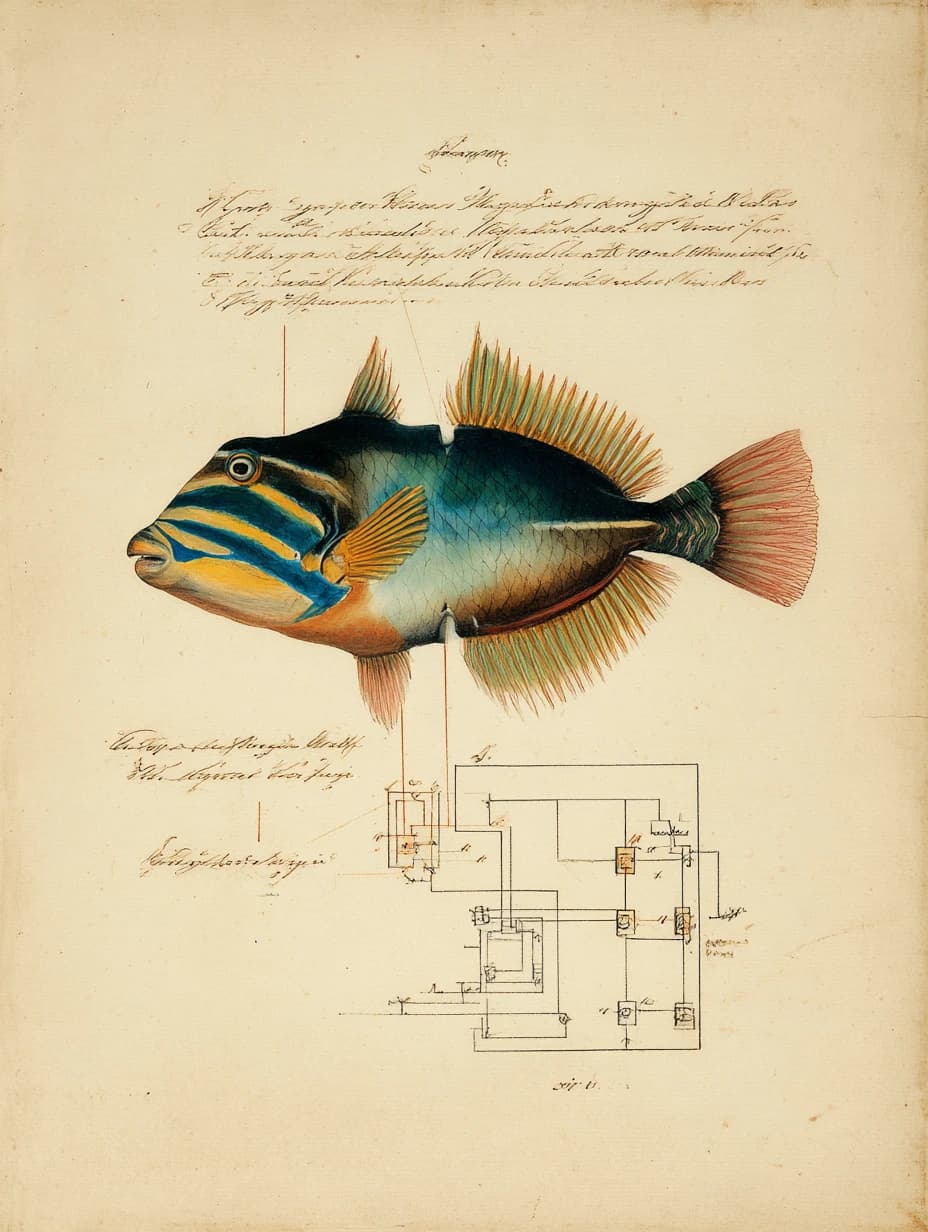
AI search has two layers that work together. The retrieval layeris what most of the industry talks about: crawlers, chunks, embeddings, citation architecture. The parametric layer is what the model already knows about a brand before it retrieves anything, shaped by training data, third-party coverage, knowledge graph presence, entity signals accumulated over years.
Retrieval optimization addresses the first. It does not address the second. A brand that has strong retrieval presence but no parametric presence gets found when the model looks things up, and ignored when it does not. For well-established topics and well-known brands, the model often answers from memory without retrieving anything.
Plate Lunch Collective works both layers. The work on the page in front of you, and the work on every asset a model ingests elsewhere. Neither half is optional.
Every platform decomposes queries differently. Retrieval weighting, citation behavior, freshness preference, and parametric balance all vary. We build for the mechanics each one actually uses.
 ChatGPT
 Perplexity
 Claude
 Gemini
 Meta AI
 Copilot
 DeepSeek
 Grok
GrokCase Study
An enterprise software vendor in a category where four competitors dominate the conversation. Buyers ask AI which tool to use, and the answer names a handful of options in order. The vendor was in the list, but not first, and their own documentation was not what the model was citing. The sources it drew on were a community forum thread and a fifteen-year-old developer Q&A post.
The content was technically thorough and structurally unreadable to a retrieval system. It was reference material organized for engineers who already knew what they were looking for, not for a model assembling a recommendation from a category question.
Plate Lunch Collective restructured the technical documentation around the questions buyers ask before they choose: what the product does, what it handles that alternatives do not, and where it fits. Each answer self-contained, each claim verifiable.
The vendor is now named in the opening sentence of the AI Overview for the category's primary recommendation query, listed first among the named options, and holds one of three source cards on a results page where the other two are community forum threads. That placement has held across manual observation over eighteen months. Over the same period, organic clicks trended down while direct and branded visits rose. Server logs showed increasing referrals from AI platforms, and trial downloads attributed to AI as a source increased alongside them.
Category vocabulary is inconsistent across sources, which means entity resolution fails at the embedding stage before retrieval even runs.
A hybrid category that retrieval systems resolve inconsistently, with content often pulled toward either agriculture or tourism depending on the query, losing the specific intent in either direction.
Legacy institutional authority does not automatically translate into retrieval-ready digital presence, leaving decades of expertise invisible to models that cannot find structured signal to cite.
Retrieval layer presence is the only commercial asset creators actually own, because platform distribution is rented and platform ranking changes weekly.
Product-level queries decompose into many sub-questions, and brands without passage-level structure on product pages retrieve for none of them despite strong category presence.
Properties with layered offerings get flattened by AI platforms into a single category frame, losing buyers whose intent matches a layer the model is not surfacing.
Local intent queries trigger retrieval more often than any other commercial category, but the citation candidates are dominated by directory aggregators unless the business has direct entity signals.
Expertise lives in practitioner heads and unpublished client work, leaving the retrieval index with almost nothing to cite when buyers ask AI platforms for recommendations.
Category vocabulary hardens slowly in training data, which means newer SaaS products must work harder to establish the entity signals that feed parametric recognition.
Ingredient-level and formulation-level queries decompose heavily, and brands without passage-level structure retrieve for none of them despite strong topical authority.
Brand equity built on visual identity and community following carries almost no signal a model can read, verify, or cite when someone asks an assistant which brand to trust.
Destination queries decompose across accommodations, activities, timing, and logistics. Properties that are not mapped to every sub-query retrieve inconsistently across the buyer journey.
Route and trip queries resolve before the traveler lands, and a service the model cannot connect to a specific route and trip never enters the list of names it returns.
Hawaii-specific intent queries return heavily genericized mainland-equivalent results unless local entity signals are explicit and structured.
FAQ
From the Field