Back to Blog
AI SEOAEOContext MapEntity SEOSocial SearchAI Search VisibilityFractional CMO
AI Systems Are Not Googlebot. They Answer Questions With Chunks, Not Entire Pages.

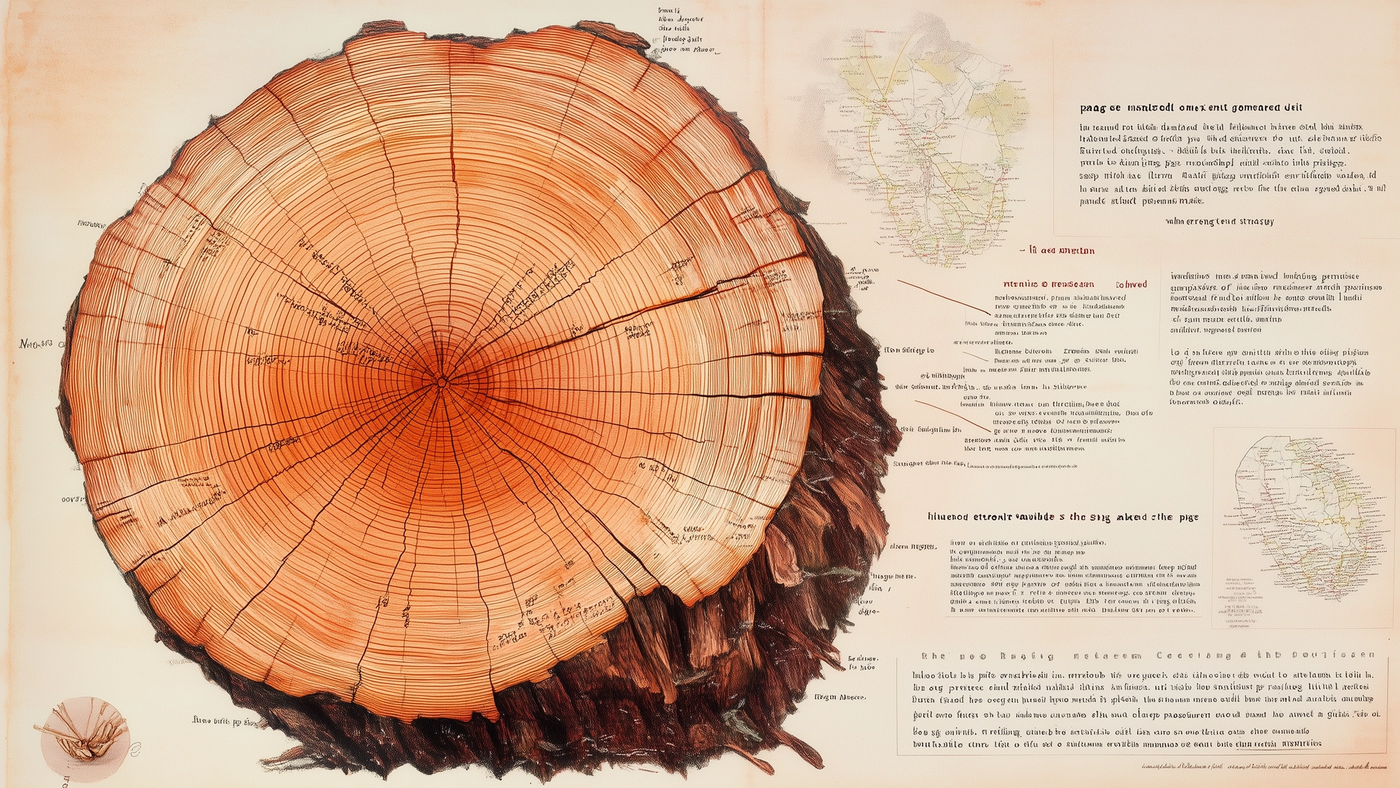
When you publish a page, you think of it as the unit. The entire thing. Title, sections, links, domain authority behind it, optimized together, evaluated together.
AI search does not retrieve pages. It retrieves sections. Understanding why changes how you write everything. It is the core problem that Answer Engine Optimization is built to solve.
Why AI search never sees your page as a whole
Before your content can be retrieved, the system breaks it into segments called chunks. This happens before any retrieval runs. Each chunk gets embedded independently, stored independently, and retrieved independently. The system evaluating whether your content answers a query never sees your page. It sees the chunk it pulled from your page.
Think of it this way. You publish a 1,200-word service page. A potential buyer asks an AI assistant which agency they should hire for AI search optimization. The system does not read your 1,200 words and decide. It pulls a 200-word chunk from your page, a 200-word chunk from a competitor's page, and several others, then synthesizes across them. Your page won or lost at the chunk level, not the page level.
What makes a section retrievable
A retrievable section answers one question completely. It does not need the section before it to make sense, and it does not hand off to the section after it to finish the thought.
The answer goes first. Not at the end of a paragraph that earns it through buildup. At the beginning, stated plainly, before the explanation. This matters because language models pay more attention to content at the start and end of what they are reading than to content in the middle. A section that opens with its conclusion is more likely to influence the final response than one that buries it three sentences in.
A marketing director writing a service page breakdown: each capability gets its own section, opens with what the capability does, then explains how. Not "we start with an audit, which involves reviewing your existing entity signals and then comparing them against how models currently describe you, ultimately producing a gap analysis." Instead: "The engagement opens with a gap analysis comparing your current entity signals against how AI models describe you." Answer first. Detail second.
Structuring sections this way is the foundation of Citation-Ready Content.
Why mixed-topic sections retrieve for nothing
When a section covers two distinct questions, the system's representation of that section gets pulled toward two different clusters in its internal map of meaning. It ends up between clusters rather than inside one. A section that sits squarely inside one cluster retrieves consistently every time a query points at that cluster. A section between two clusters retrieves weakly for both and strongly for neither.
The plain version: if your section covers what a service is and who it is for in the same block of prose, a model asking "what does this service do" and a model asking "who is this service for" will both find your section and both find it a partial match. A competitor with two focused sections, one for each question, will outscore you on both sub-queries.
Same content, different structure. Different retrieval outcome. A Context Map surfaces exactly this problem, showing which sections of your content are retrieving cleanly and which are splitting across clusters.
Why getting retrieved is only half the problem
Most retrieval systems run two stages. The first stage pulls a candidate set of sections that are roughly relevant. The second stage rescores them for precision, evaluating each candidate against the query for relevance and completeness together. A section that made the first cut but only partially answers the question gets filtered out at the second stage.
A content team writes a section on "how to measure GEO performance." It covers two metrics and mentions that there are others. That section retrieves in the first pass because the topic matches. It scores poorly in the second pass because it is incomplete. A section that covers the same two metrics, explains the mechanism behind each, and names what a meaningful shift looks like scores higher because it is a complete answer, not a partial one.
Completeness is evaluated at the section level, not the page level. Getting past the reranker is what Answer Engine Optimization is designed to do.
How to audit what you have
For each section of a page, ask one question: what is the specific question this section answers?
If you cannot name it, the section has no retrieval job. If you can name two, the section needs to be split. If the answer to the question appears in the final paragraph rather than the opening sentence, restructure it. If you want this done for your whole site, that is what the Context Map delivers.
The page as a whole builds authority for its topic cluster. Each section within it retrieves independently for its specific sub-query. Optimizing the page without optimizing the sections gets you halfway there.
Ready to appear in AI search?
We work with businesses across every industry. If you have questions about where you stand in modern search, we are easy to reach.

Hayden Bond
Hayden Bond has been doing SEO since 2004. He founded Plate Lunch Collective in Aiea, helping brands get cited by AI platforms rather than just ranked by Google.
Related Articles

AI search has six buyer paths. Your website sees one.
The AI Discovery Problem Isn't the Same for Every Hawaii Business
Retrieval Layer and Parametric Layer: The Two Systems That Determine AI Search Visibility
Why SEO, Social Media, and AI Search Are Now Business Infrastructure (Not Marketing Tactics)
AI Search Leapfrogged Traditional Search as the First Stop