The Concept
Parametric Knowledge vs. Retrieval-Augmented Knowledge Every large language model operates with two distinct knowledge sources. Understanding which one is active when a model answers a question about your brand is one of the most important and least discussed dynamics in
AI search marketing.
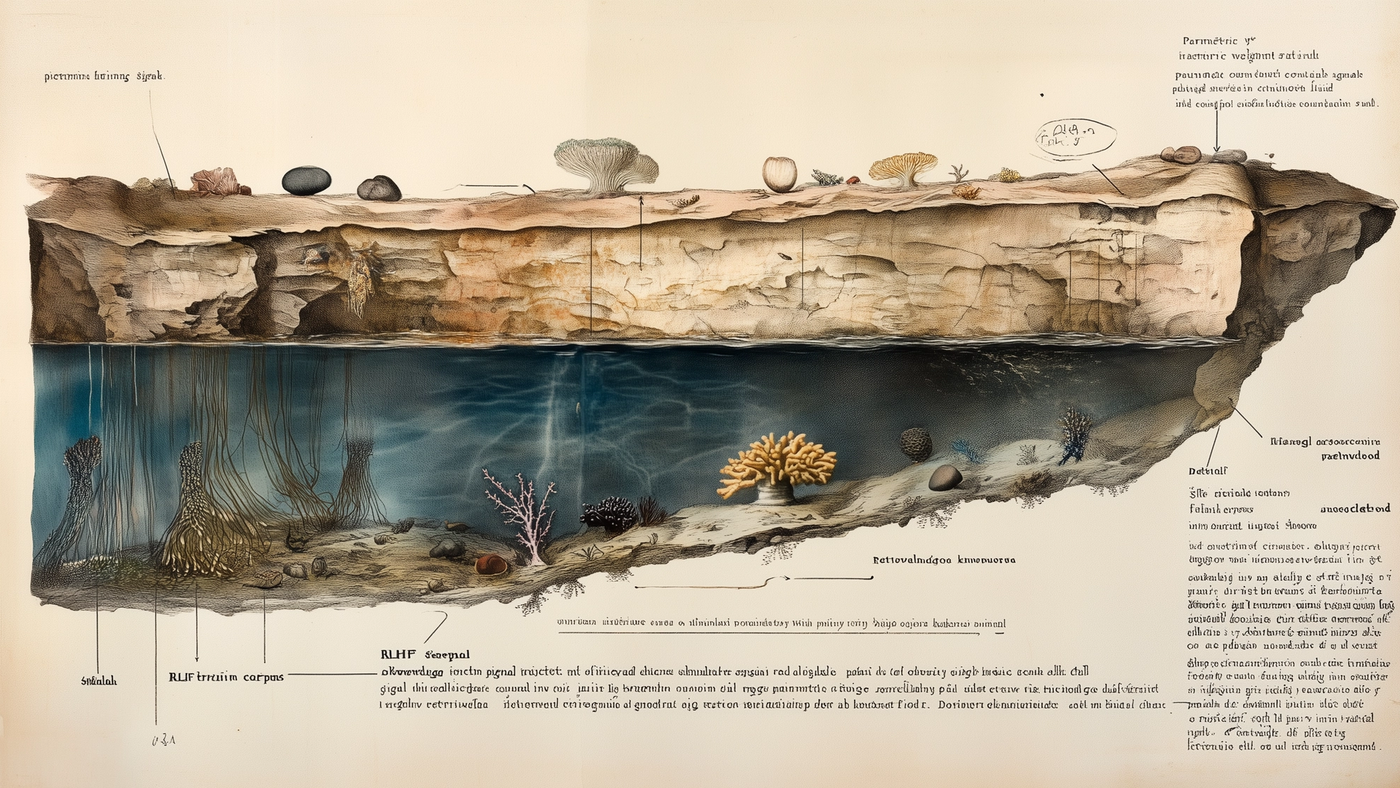
Parametric knowledge is what the model learned during training and stored in its weights. Think of it as permanent memory. Retrieval knowledge is what the model fetches in real time from external sources before generating a response. Most AI search responses blend both. The ratio between them, and which one dominates for your brand, determines what a model says about you and whether it can be corrected.
ELI5: The Expert vs. The Researcher
Imagine two people who can answer questions about your brand.
The first is an expert who studied your industry for years but has not read anything new in twelve months. They answer confidently from memory. They are fast and fluent, occasionally wrong about recent developments. They do not know they are wrong, because they have not checked.
The second is a researcher who knows less but always looks things up before answering. They are slower, they cite their sources, and their answers reflect what is actually true right now.
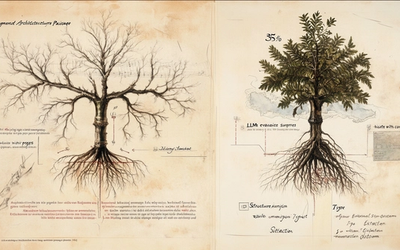
A language model is both of these people at once. The expert is the parametric layer: trained knowledge baked into the model's weights. The researcher is the
retrieval layer: real-time lookups from indexed web content. For most commercial queries, the model uses both. The expert frames the answer and the researcher fills in the current details.
The problem for most brands is that they face two distinct versions of this: either the expert has never heard of them, or the expert has heard of them incorrectly. In both cases, the researcher cannot find enough to correct it. Which version of the problem you have changes what you need to do about it.
Practitioner Level
Your brand's parametric footprint determines your visibility
The 2025 AI Visibility Report from The Digital Bloom found that approximately 60% of
ChatGPT queries are answered primarily from parametric knowledge, with retrieval playing a secondary or confirmatory role. This number will shift as models improve and retrieval becomes cheaper, but it reflects the current reality: for well-established topics and well-known brands, the model answers from memory first.
The implications depend on where your brand sits.
If your brand is well-represented in training data: You have a parametric presence. The model has an opinion about you. That opinion may be accurate, outdated, or subtly wrong in ways that are difficult to detect and correct. The main risk is miscategorization, not invisibility. A brand that was accurately described in 2023 training data but has since repositioned may be described incorrectly by a model answering from parametric memory, even when current retrieval would correct it.
If your brand is not well-represented in training data: You have no parametric presence. The model has no opinion about you and will not volunteer information about you unless retrieval surfaces it. The risk is invisibility on queries where retrieval is not triggered. And retrieval is not always triggered. For informational queries on well-established topics, many models answer entirely from parametric knowledge without retrieving anything.
The parametric inertia problem cuts differently depending on confidence. When what the model remembers from training contradicts what it just retrieved, the outcome is not deterministic. Research published in 2025 found that
RAG systems "often exhibit irrational and inconsistent behavior when reconciling conflicts between internal parametric knowledge and retrieved context." Sometimes retrieved content wins. Sometimes parametric memory wins. Sometimes the model hedges. But the mechanism behind this matters strategically: the model's confidence in its parametric representation determines how much retrieved counter-evidence it takes to override it. High-confidence parametric beliefs resist correction not because the system is broken, but because confidence weighting is intentional. It prevents the model from being trivially manipulated by a single retrieved document. Low-confidence parametric beliefs (sparse coverage, inconsistent historical description) are actually easier to correct via retrieval than high-confidence ones. That changes the priority order depending on your situation.
Rand Fishkin's mid-2025 analysis made a related observation that sharpens this point: for many ChatGPT responses, the model chooses its answer from training data first and then finds URLs to support a decision already made. The citations are post-hoc justification, not the source of the answer. This is not universally true, but it is true often enough to matter. For brands trying to influence what ChatGPT says about them, retrieval optimization alone is insufficient if the parametric layer has a competing representation. You cannot retrieve your way out of a wrong
Wikipedia entry.
Why one strategy is not enough: Building
AI search visibility requires working both layers.
Retrieval optimization (structured content, entity signals, citation-ready passages) addresses the researcher. Training data presence (Wikipedia, widely-cited publications, authoritative third-party mentions) addresses the expert. Most
GEO and
AEO strategies focus almost entirely on the retrieval layer and ignore the parametric layer. That is a gap with a specific cost: roughly 60% of ChatGPT queries answered primarily from parametric knowledge are queries where retrieval optimization, on its own, does nothing.
The Technical Layer
How the two layers interact
When a model receives a query, it does not make a binary choice between parametric and retrieval. The process has more steps than that.
The model first generates an internal representation of what it knows about the query from training. This parametric activation happens before any retrieval occurs. The model then assesses, implicitly based on its training, whether the query requires current information, specific facts, or sources that should be cited. If it does, retrieval is triggered.
The retrieved content is then embedded alongside the parametric context, and the model generates a response that synthesizes both. In cases of conflict between the two, the model does not apply a deterministic rule. As noted above, the confidence weighting in the parametric layer is the key variable. A model with a strong, confident representation of your brand that is now outdated will not reliably update that representation from retrieved content that contradicts it. Parametric inertia is proportional to parametric confidence.
How the parametric/retrieval balance varies
| Platform | Parametric Weight | Retrieval Trigger | Practical Implication |
|---|
| ChatGPT | High for established topics; answers from memory on well-known subjects without retrieval | Triggered by queries that imply current events, specific data, or source citation | Brands not in training data are invisible on non-retrieval queries; brands in training data risk outdated descriptions that retrieved content cannot reliably correct |
| Perplexity | Lower; designed as a retrieval-first system with live web access | Retrieval is triggered for nearly all queries; parametric knowledge plays a framing role | More current, more correctable; low parametric dominance means retrieved content has a better chance of landing |
| Google AI Overviews | Moderate; the Knowledge Graph functions as a structured parametric layer | Retrieval triggered by commercial, transactional, and informational queries with current relevance | Knowledge Graph presence directly feeds the parametric layer; this is why entity SEO and AI search visibility are mechanically inseparable for Google specifically. Optimizing for AI Overviews without addressing entity signals is addressing only half the system. |
Parametric Weight
High for established topics; answers from memory on well-known subjects without retrieval
Retrieval Trigger
Triggered by queries that imply current events, specific data, or source citation
Practical Implication
Brands not in training data are invisible on non-retrieval queries; brands in training data risk outdated descriptions that retrieved content cannot reliably correct
Parametric Weight
Lower; designed as a retrieval-first system with live web access
Retrieval Trigger
Retrieval is triggered for nearly all queries; parametric knowledge plays a framing role
Practical Implication
More current, more correctable; low parametric dominance means retrieved content has a better chance of landing
Platform
Google AI Overviews
Parametric Weight
Moderate; the Knowledge Graph functions as a structured parametric layer
Retrieval Trigger
Retrieval triggered by commercial, transactional, and informational queries with current relevance
Practical Implication
Knowledge Graph presence directly feeds the parametric layer; this is why entity SEO and AI search visibility are mechanically inseparable for Google specifically. Optimizing for AI Overviews without addressing entity signals is addressing only half the system.
The Google row is the one most practitioners miss. The
Knowledge Graph is not just an SEO signal. It is a structured input to the parametric layer that operates before retrieval runs. A brand with a well-developed
entity footprint (
schema markup,
Wikidata connections,
Knowledge Panel presence) has effectively pre-loaded favorable parametric context into Google's system. A brand without one is starting from a weaker position regardless of how well its retrieval content is structured.
What Changed Recently
January to March 2026 developments worth knowing
A January 2026 Arxiv paper on parametric knowledge injection in RAG systems found that
fine-tuning models on domain-specific content shifts the parametric/retrieval balance for that domain. Models fine-tuned on industry-specific corpora answer more from parametric memory for that industry's queries. The practical implication: if the AI platform serving your vertical has been fine-tuned on your industry's content, your presence in that
training corpus matters more than general web retrieval for that platform. This is especially relevant for specialized verticals like healthcare, legal, and finance, where platform providers are most likely to have done domain-specific fine-tuning. If you are in one of those verticals, the question to ask is not just "can I be retrieved" but "am I in the corpus the model was fine-tuned on."
The One Thing to Take Away
Retrieval gets you found when the model looks things up. Parametric presence shapes what the model says when it does not look anything up, which for ChatGPT is the majority of the time.
Most
GEO and
AEO strategies treat these as the same problem. They are not. Retrieval optimization and training data presence require different tactics, different channels, and different timeframes. Treating one as a proxy for the other leaves the other half of the problem unsolved.
Further Reading
For the research on how RAG systems handle conflicts between parametric and retrieved knowledge, the ScienceDirect paper on knowledge conflict resolution in RAG is the most current academic treatment:
A framework for resolving knowledge conflicts in retrieval-augmented generationFor the practitioner marketing perspective on the parametric/retrieval split and what it means for AI visibility strategy, The Digital Bloom's 2025 AI Visibility Report is the most data-grounded overview available:
2025 AI Visibility Report: How LLMs Choose What Sources to CiteFor the Rand Fishkin observation on post-hoc citation behavior in ChatGPT, the original LinkedIn post is worth reading in full for the discussion it generated among practitioners:
AI Tool Answer Sources and Citations