The Intimacy of Intent: What Voice Search Reveals About Who We Really Are

Vintage film photograph of a smart speaker glowing on a dark kitchen counter at night, with a hand and mug barely visible in warm ambient light
Late night questions we wouldn't type. The intimacy of voice search happens in moments like this—alone, unguarded, asking what we really need to know.

There's a moment, usually late at night, when you're alone with your phone or standing in your kitchen with a smart speaker glowing softly in the corner, and you ask it something you would never type. Because typing it would mean seeing it, the words lined up in that search bar, a little monument to your worry or your ignorance or your fear. So instead you speak it into the air, where it exists for only a moment before dissolving into whatever computational ether these things live in, and you wait for an answer.

When people type, they edit themselves. When they speak, they don't.

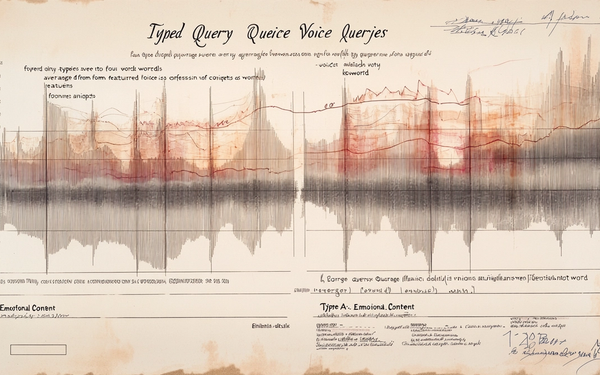
The average typed search query is three to four words long. Economical, almost telegraphic, the way you'd label a file folder. "Best running shoes." "Plantar fasciitis treatment." "Interview tips." But the average voice search query is twenty-nine words long, which is not a search query so much as it is a confession, a plea, a fragment of an actual human conversation that starts with "I" and includes qualifiers like "but I'm worried" or "and I don't have much money" or "because I've never done this before."

Query TypeAverage LengthFormatCommon Elements
Typed Search3-4 wordsKeyword-based, fragmentedMinimal context, abbreviated
Voice Search29 wordsConversational, full questionsQuestion words, personal pronouns, qualifiers

Voice search reveals something closer to the truth of what people actually need. The messy, specific, deeply personal version that includes all the context we usually strip away when we're trying to seem like we have it together.

The Architecture of an Unedited Question

A person who might type "running shoes plantar fasciitis" will instead ask their phone, "What are the best running shoes if I have plantar fasciitis and I'm overweight and I'm just starting to try to exercise and I don't want my feet to hurt more than they already do?"

The spoken version reveals what was invisible in the typed one: the weight, the beginner status, the past-tense trying (which suggests previous failed attempts), the amplification of existing pain. This is not additional information in the technical sense. It's the emotional infrastructure of the question, the parts that matter most to the person asking it.

The researchers have a term for why this happens: pre-articulation forethought. Before we speak, we pause. We compose the sentence in our heads because we can't easily backspace our way out of misspeaking. That pause forces clarity. We ask what we actually mean, not the abbreviated keyword version we've trained ourselves to type.

The research hints at something deeper but doesn't quite name it. When we speak to our devices, even knowing, intellectually, that we're talking to a collection of algorithms, we slip into the social mode of conversation. We say "please" and "thank you" to Alexa. We anthropomorphize these things, ascribe them personalities, treat them as if they were listening in the way another person listens. And because we're in that conversational mode, we speak the way we would speak to another person. We give context. We admit things we wouldn't write down.

What Gets Revealed in the Asking

Seventy-six percent of smart speaker users conduct local searches at least once a week, and when they find what they're looking for, twenty-eight percent of them call the business immediately. This isn't browsing. Someone's standing in their kitchen or sitting in their car saying "I need" and calling before they second-guess themselves.

The queries go beyond restaurants. "How do I know if I should go to the emergency room." "What do I do if I think my teenager is depressed." "Am I having a heart attack or is it just anxiety." These are 3am questions, the kind you ask when you're scared and alone and need an answer right now. The immediacy of voice, the fact that you can ask without unlocking your phone, without watching your own fingers type out your worry, makes it the medium for questions that sit too close to the bone.

The privacy concerns are real. Always-listening microphones, data collection, who's hearing what. But users have already decided the convenience is worth it, even if they haven't fully thought through what they're trading away. In that trade, the queries become more honest. More vulnerable. More like the questions we'd ask a doctor or a therapist or a close friend if we weren't so worried about being judged.

Vintage film photograph of a phone with voice assistant active on a bedside table at 3:03 AM, with ghostly text reading "Am I having a heart attack or is it just anxiety?"
The questions we ask at 3am. Voice search captures the unedited worry, the kind we're too scared to type.

Building Content for the Unedited Self

If you're building content for this kind of search, and if you're building content at all anymore, you're building it for this, you have to think differently about what you're making and who you're making it for.

Forty percent of voice search answers come from featured snippets, those boxed summaries that appear at the top of search results. The average answer that gets read aloud is twenty-nine words. Twenty-nine words is not very many. It's a tight little paragraph, a self-contained thought, the kind of thing you could fit on an index card. But behind that twenty-nine-word answer needs to be a much longer document, and the requirements are specific:

Ranking FactorWhat Voice Search DemandsWhy It Matters
Featured Snippets40.7% of voice answers source from Position ZeroThis is your primary target, the algorithm's chosen answer
Content DepthAverage result page: 2,312 wordsGoogle pulls from comprehensive, authoritative content
Readability9th-grade reading levelMust be clear enough for a machine to parse and read aloud
Page SpeedLoads 52% faster than averageVoice users need immediate answers, not loading screens
AuthorityDomain Rating of 76.8Trust signals matter when answering vulnerable questions
Answer Length29 words when read aloudConcise, self-contained, immediately useful

Behind that twenty-nine-word answer needs to be a much longer document. Content that works as both a quick extraction and a comprehensive resource. Modular enough to be pulled apart and reassembled depending on which intersection of needs someone's asking about.

The person asking about running shoes isn't just asking about plantar fasciitis. They're asking about plantar fasciitis and weight and being a beginner and not wanting to spend too much money and being afraid of making it worse. Your content needs to address each of these intersections:

Primary Need+ Weight Concerns+ Budget Constraints+ Injury History+ Beginner Status
Pain relief from plantar fasciitisSupport + cushioning for heavier runnersMedical-grade features under $100Podiatrist-approved optionsGradual break-in guidance, realistic expectations

Each intersection needs its own section. An answer that can be extracted and read aloud on its own, but that also builds into something complete. This is what "modular content" actually means. Not shorter pieces, but pieces that can be understood in isolation while still being part of something larger.

This requires writing in a way that acknowledges the subtext. If someone is asking about interview clothes on a budget, they're not really asking about clothes. They're asking whether they can look credible without spending money they don't have, whether they'll be judged for being cheap, whether it's possible to pass as someone who belongs in that room. Your content needs to answer the question they asked, but it also needs to answer the question underneath it, the one about worth and belonging and being enough.

What They AskWhat They're Really AskingHow to Address Both
"Best affordable interview suits""Will I look credible on a budget? Will they judge me?"Direct answer on specific suits + reassurance: "Professional doesn't mean expensive. Interviewers care more about fit and confidence than brand names"
"Quick healthy meals for one person""Am I worth cooking for when it's just me?"Practical recipes + reframe: "Cooking for yourself is an act of care, not a concession to being alone"
"How to prepare for medical school interview""Am I good enough? Will they see through me?"Interview prep + reality check: "What interviewers actually look for (and it's not perfection)"

The Featured Snippet optimization guides will tell you to use question headers, to write in clear topic sentences, to structure your content with H2s and H3s that search engines can parse. Fine. But the real work is understanding what people are actually asking when they ask these questions aloud, alone in their homes or cars, when they think no one is listening.

work with me

This is the work I do with clients. Figuring out what people are actually asking when they search, and building content that can meet them there. If you're trying to figure out how your content needs to change, let's talk.

Get in touch

The Measurement Problem

The challenge with voice search is that it doesn't show up in your analytics the way you expect it to. Someone speaks a question to their phone, gets an answer read aloud from your website, and may never click through to see the full page. From a traditional traffic perspective, this looks like failure. From an actual-human-need-being-met perspective, it's success.

You have to start measuring different things. Query length becomes more important than query volume. You want to see those eight-word, ten-word, twelve-word searches increasing because those are the people who are telling you exactly what they need. Bounce rate needs to be evaluated differently. High bounce on a long query? They probably found what they needed in the snippet. First-person language means high intent. Someone solving a problem right now, not just browsing.

What to Track Instead:

Traditional MetricVoice Search EquivalentWhat It Actually Tells You
Total traffic8+ word query volumeHow many people are asking detailed, specific questions
Bounce rateBounce rate segmented by query lengthWhether long queries are finding complete answers (high bounce = success)
Keyword rankingsQuestion-format query performanceHow well you rank for conversational searches
Desktop conversionsCross-device conversion pathsHow voice research leads to desktop purchases later
Last-click attributionAssisted conversions from mobile/voiceVoice's role early in the decision journey

The conversion paths get longer and more complex. Someone might ask their smart speaker a question at home, get pointed toward your business, and then later, on their laptop at work, come back and convert. Traditional last-click attribution will give the credit to the wrong source. You need to start thinking in terms of assisted conversions, of how voice search plays a role earlier in the journey, in the moment when someone is just beginning to articulate what they need.

The Ethical Weight of Being Heard

There's a responsibility that comes with this kind of insight into what people actually need. When someone speaks their worry into the air and your content is the answer they get back, you're being trusted with something real. The intimacy of voice search is not a marketing opportunity to be exploited. It's a window into human vulnerability that demands a certain kind of care.

You don't manufacture insecurity to sell products. You don't use the intimate language of the query to manipulate people into buying things they don't need. You don't create false urgency around emotional pain points. Give people the information without making them feel worse for asking.

Harder than it sounds. Marketing's instinct is always to create more need, find the gap and widen it. But the people using voice search have already told you the gap. They've been specific about it. They've given you all the context. What they need from you is not more anxiety but less. An answer that makes them feel slightly more capable of handling whatever they're facing.

Vintage film photograph of two hands gently holding each other in soft natural light, conveying trust and care
The weight of being heard. When someone speaks their vulnerability into the air, you're being trusted with something real.

Meeting People in the Unedited Space

We're watching the performance erode. The pretense that we knew what we were doing and just needed confirmation. Voice search lets people admit they don't know, that they're scared, that they need help with things they maybe should have figured out already.

The queries are longer because life is complicated. The questions are more specific because generic advice doesn't fit. The language is more vulnerable because speaking feels private, even when it isn't, and because when you're alone asking for help, you tell the truth.

This creates both an opportunity and a responsibility. You can actually help people in the moment they need it. Be the answer to the question they were almost afraid to ask. But only if you can do that without exploiting the vulnerability. Without turning the intimacy into another conversion funnel.

Success won't come from having the most keywords or the highest domain authority, though those help. It comes from meeting people in that unedited space. Hearing not just the words but the worry underneath them.


This is how I approach most problems in search and content strategy. I notice something, a pattern in user behavior or a shift in how people interact with technology, and I sit with it until I can articulate what I think is actually happening underneath. Then I go looking for data to either prove or disprove the hypothesis.

In this case, I kept noticing that the voice queries showing up in client analytics were fundamentally different. Not just longer, but more honest. More specific. Carrying more emotional weight. It felt like people were revealing something about themselves they wouldn't have typed, and I wanted to understand why.

What I found confirmed it. The research on pre-articulation forethought from Wharton. The data on query length and conversational formats. The privacy studies showing that people make different trust calculations with voice. The Featured Snippet analysis proving that Google rewards content built for these longer, more vulnerable questions. All of it pointed to the same thing: voice search isn't just a different input method. It's a window into a more honest version of user intent.

If you want to dig into the research yourself, the sources are below. The Backlinko voice search study is particularly good for understanding the technical optimization side. The Wharton piece on pre-articulation forethought explains the psychology better than anything else I've found. And the privacy research from the ACM gives you a sense of the trade-offs users are making when they choose to speak instead of type.

Sources:

Member discussion